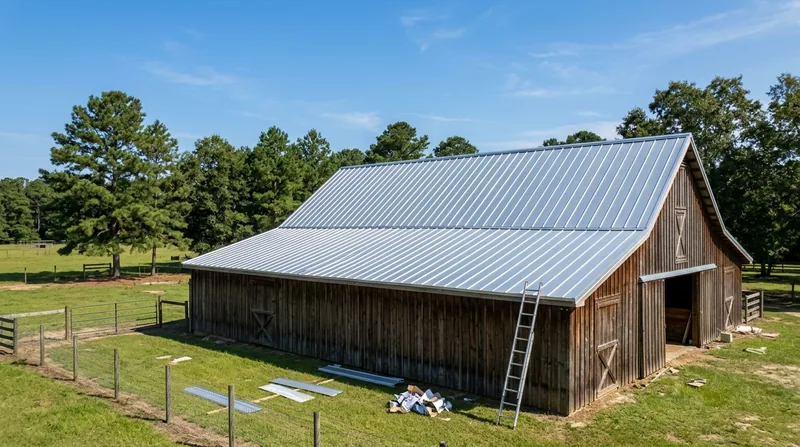




Commercial & Agricultural Metal Roofing in Columbia: Built for Barns, Shops, and Warehouses
Columbia sits where the Broad and Saluda rivers form the Congaree on the Fall Line, and that geography drives what a commercial or agricultural roof has to survive. From peach orchards and horse farms out past Pelion and Swansea to equipment sheds behind shops in Cayce and West Columbia, the same metal panel systems keep working through 95-degree summers, severe thunderstorms, hail, and the ice storms that roll through the Midlands. Commercial & Agricultural Metal Roofing in Columbia is a different animal from a house roof: longer spans, more penetrations, and buildings that cannot afford to shut down for a week. We install, repair, and replace those systems with panels sized to the building and fasteners chosen for the exposure. If you are still weighing options for a smaller structure, start with our metal roof installation page and we will scale the same approach up to your barn or warehouse.
Why Midlands Barns and Commercial Buildings Need a Different Metal Roof
The building stock around Columbia tells the story. You have hundred-year-old mill-village structures in Olympia, post-war brick commercial blocks in Forest Acres and St. Andrews, and newer steel-frame warehouses out toward Blythewood and Lexington. Add the farm buildings across the rural stretches and you get a mix of roof decks, purlin spacings, and old fastener patterns that no single off-the-shelf panel solves. The dominant failure mode here is not snow load. It is fastener back-out and washer degradation after years of thermal cycling, followed by wind-driven rain finding the holes during a summer squall.
- We measure purlin spacing and deck condition before we specify a panel, because a 26-gauge panel on 4-foot purlins will oil-can.
- We match fastener length and washer type to the substrate, since screwing into old wood purlins and into steel purlins are two different jobs.
- We plan penetrations for vents, stacks, and equipment curbs so the flashing is detailed once, not patched later.
- We account for the heat island effect on low-slope shops, where attic ventilation is limited and reflective finishes pay back fast.
That up-front measuring is what separates a roof that lasts 30 years from one that leaks in year four.
Key info: A peach packing shed outside Gilbert and a light commercial building on Two Notch Road can have the same square footage and completely different roof needs. The shed needs wide panels and heavy ventilation; the commercial building needs insulation and a clean curb detail for HVAC units. We scope each one on site.
Roofing permits are commonly required for a full replacement, and thresholds and inspection requirements vary by jurisdiction. Always confirm the current rules with the local building department before work starts. The State of South Carolina portal is a useful starting point for contractor licensing checks and local government links.
How We Approach a Commercial or Agricultural Metal Roof in Columbia
Every job starts with a walk of the building, not a phone quote. We look at the existing roof from underneath where we can, check the purlins and deck, and photograph the problem areas. For a working barn or an occupied shop, we also map out how to stage materials without blocking the equipment door or the loading dock. The sequence below is how a typical Columbia project runs.
- We inspect the deck, purlins, and existing fasteners and document what we find with photos.
- We specify the panel profile, gauge, finish, and insulation to match the building and its exposure.
- We pull the permit and schedule the work around your operating hours where possible.
- We remove the old roof or install over it only where code allows, and we never bury a failing deck.
- We install panels, closures, and flashing, then walk the roof and water-test the penetrations.
- We clean the site and hand over photos and warranty paperwork.
That sequence keeps surprises on our side of the contract, not yours.
Key info: On a horse barn near Chapin, the owner needed the run-in shed roof replaced without moving the animals. We staged panels on the leeward side, worked in two half-day phases, and kept the stalls dry. That kind of staging plan is part of the estimate, not an afterthought.
When a roof is too far gone for repair, we handle it as a full metal roof replacement with the same crew and the same documentation.
Panel Systems and Approaches We Use
Not every building wants the same roof. A hay barn and a retail warehouse have different priorities, and the table below shows how we match the approach to the structure. We will tell you plainly when a cheaper panel is the right call and when it is not.
| Approach | Description | Best for |
|---|---|---|
| Exposed-fastener ribbed panel | Screw-down 26 or 29 gauge panels with exposed washers, fast to install and easy to repair. | Barns, sheds, equipment storage, and budget-driven commercial roofs. |
| Standing seam | Concealed-fastener panels with raised seams, no exposed screws through the field. | Warehouses, retail, and any building where leaks at fasteners are unacceptable. |
| Insulated panel system | Metal panels bonded to foam insulation for thermal control and condensation management. | Climate-controlled shops, cold storage, and buildings with high interior humidity. |
| Retrofit over existing roof | New panels installed over a sound existing roof where code allows, with proper purlin support. | Older commercial buildings where tear-off disruption is a real cost. |
| Repair and re-fastening | Replacing backed-out screws, worn washers, and damaged panels without a full re-roof. | Structurally sound roofs with localized fastener and leak problems. |
We will recommend the least expensive approach that actually solves the problem, and we put that recommendation in writing.
Commercial & Agricultural Metal Roofing Cost in Columbia: What to Expect
Pricing on this kind of roof is driven by square footage, panel type, insulation, and access, not by a flat rate per square. A simple equipment shed in Eastover and a warehouse with HVAC curbs and a loading dock in West Columbia are not the same job even at the same footprint. We start every project with a free on-site estimate, and we give you a written scope so you can compare bids apples to apples. For a fuller picture of how we structure numbers, see our pricing overview.
What moves the number most: the panel system (exposed fastener is the budget option, standing seam and insulated panels cost more), whether we tear off or retrofit, how much flashing and penetration work the building needs, and how accessible the roof is for staging and equipment. Getting two or three estimates is smart on any commercial or agricultural job. It keeps the scope honest and shows you where one bidder is cutting a corner another is not.
Commercial & Agricultural Metal Roofing Near Me: How to Vet a Contractor Around Columbia
Hiring for a barn or a commercial building is a bigger commitment than a house roof, so the vetting should be tighter. Start with licensing and insurance, because a commercial roof is a liability question as much as a construction one. Then ask for references on buildings similar to yours, not just residential jobs. Finally, make sure the contractor understands the permit and inspection process for your jurisdiction, since Columbia, Lexington, and the smaller towns do not all handle commercial roofing permits the same way.
- Confirm the contractor is licensed and carries general liability and workers compensation insurance, and ask for a certificate.
- Get at least three written estimates that describe the panel, gauge, finish, and flashing details, not just a lump sum.
- Ask for references on commercial or agricultural buildings and actually call them.
- Verify who pulls the permit and who is responsible for inspections.
- Check HOA or historic district design review if the building sits in a regulated area.
If a contractor cannot answer those questions clearly, keep looking. You can reach us through our contact page when you are ready to compare scopes.
We are a Metal Roofing Alliance member, and we put our scope, schedule, and warranty terms in writing before the first panel comes off the truck.
Commercial & Agricultural Metal Roofing in Columbia: Pricing Guide
| Service | Price | Details |
|---|---|---|
| Equipment shed or small barn roof | Free estimate | Includes on-site measurement, panel recommendation, and written scope; square footage and access drive the final number. |
| Exposed-fastener ribbed panel install | Starting at $4.50 per sq ft | Covers panels, fasteners, closures, and basic flashing; tear-off and deck repair add to the total. |
| Standing seam commercial roof | Starting at $9.00 per sq ft | Concealed fasteners and raised seams; building height, penetration count, and insulation raise the figure. |
| Insulated panel system | On estimate | Foam-insulated panels priced per project; interior humidity, span, and curb details require an on-site look. |
| Repair or re-fastening | Starting at $450 | Covers screw and washer replacement on a defined area; widespread back-out or deck rot pushes it higher. |
| Travel | Included | In Columbia and surrounding Midlands areas, with no separate call-out or mileage fee. |
Indicative pricing, the exact cost depends on square footage, finish, and site access. Free personalized estimate within 24h at (803) 353-5064.


